01

Buy
Buy something with settled money.
“Bought a chair for $4 at a garage sale.”

The rules, with Bill
Start with exactly $1. Find a thing. Give it a next chapter. Bill keeps the ledger; Gary keeps an eye on the rubbish. Neither is impressed by pretend numbers.

Buy and Sell move money. Fix and Make change the thing. Swap? A straight thing-for-thing trade.
Buy something with settled money.
“Bought a chair for $4 at a garage sale.”

Trade an item for money; log it and let it settle.
“Sold the chair. Buyer confirmed. Bill’s on it.”

Trade one thing for another, with no cash.
“Swapped my vase for a little shelf.”

Repair, clean or improve an item you hold.
“Tightened the chair leg. Wobble: gone.”

Build something from what you’ve already got.
“Turned leftover timber into a plant stand.”
Cash alongside a swap? Bill logs a separate Buy and Sell. Fix and Make don’t move money by themselves; log any purchases separately.
An invented example, not a promised result. Earlier trades have settled, the repair uses supplies already on hand, and there’s no other cash left over.
One dollar. Yours. Try not to spend it on gum.
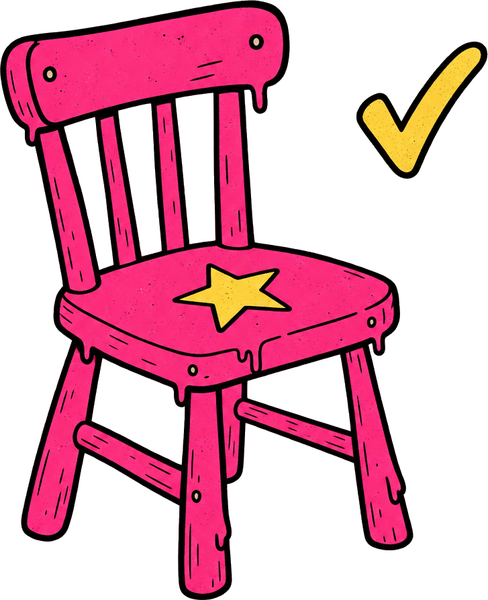
You’ve traded up to $4 in settled cash. Buy the wobbly chair for $4. Cash left: $0.
Repair the leg safely. Log the Fix with before-and-after evidence. One chair kept out of the bin.
The buyer confirms. Wait 7 days for settlement. Then Bill counts the $27 you actually have.
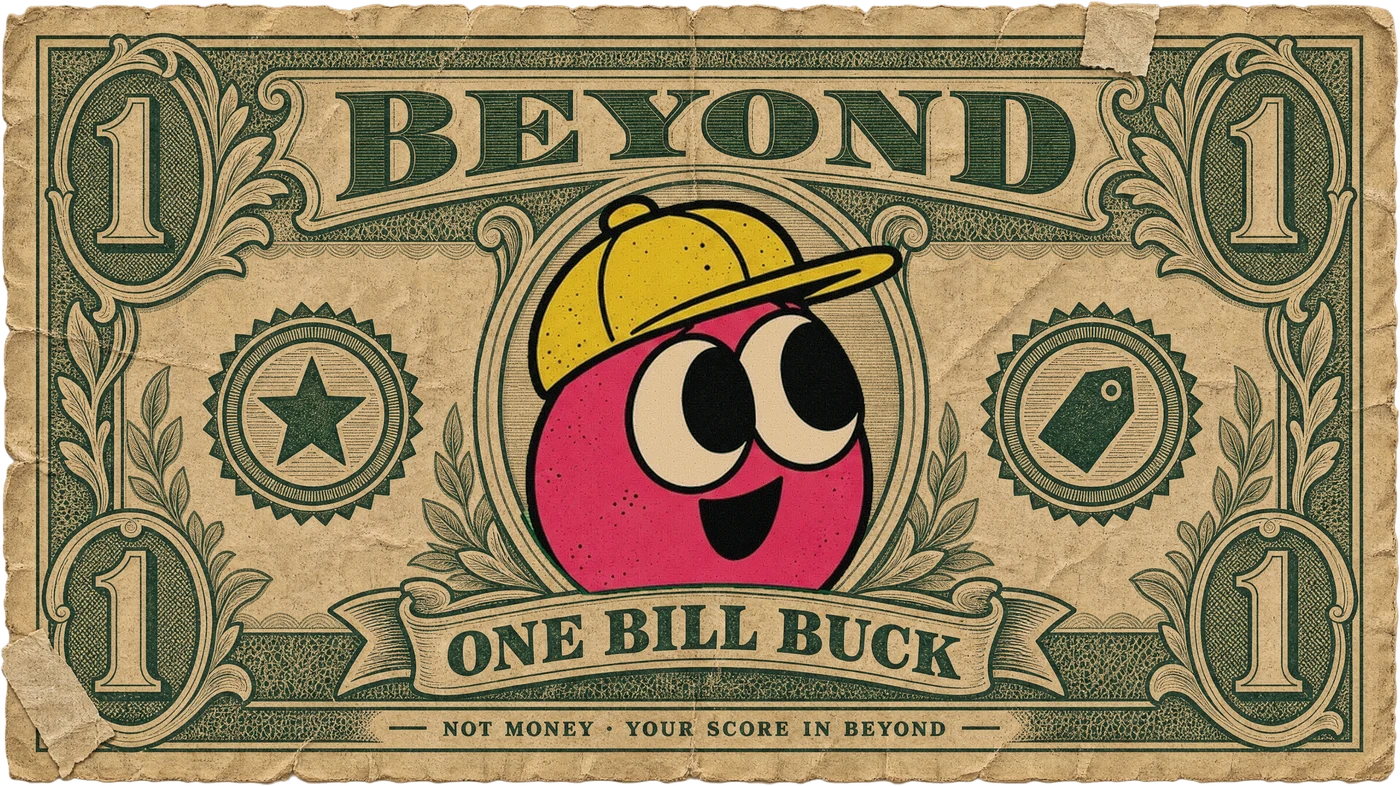
Shown as 27X. That’s the settled $27 in your hands, not the margin on the chair.
$27 sale − $4 paid = $23 margin.
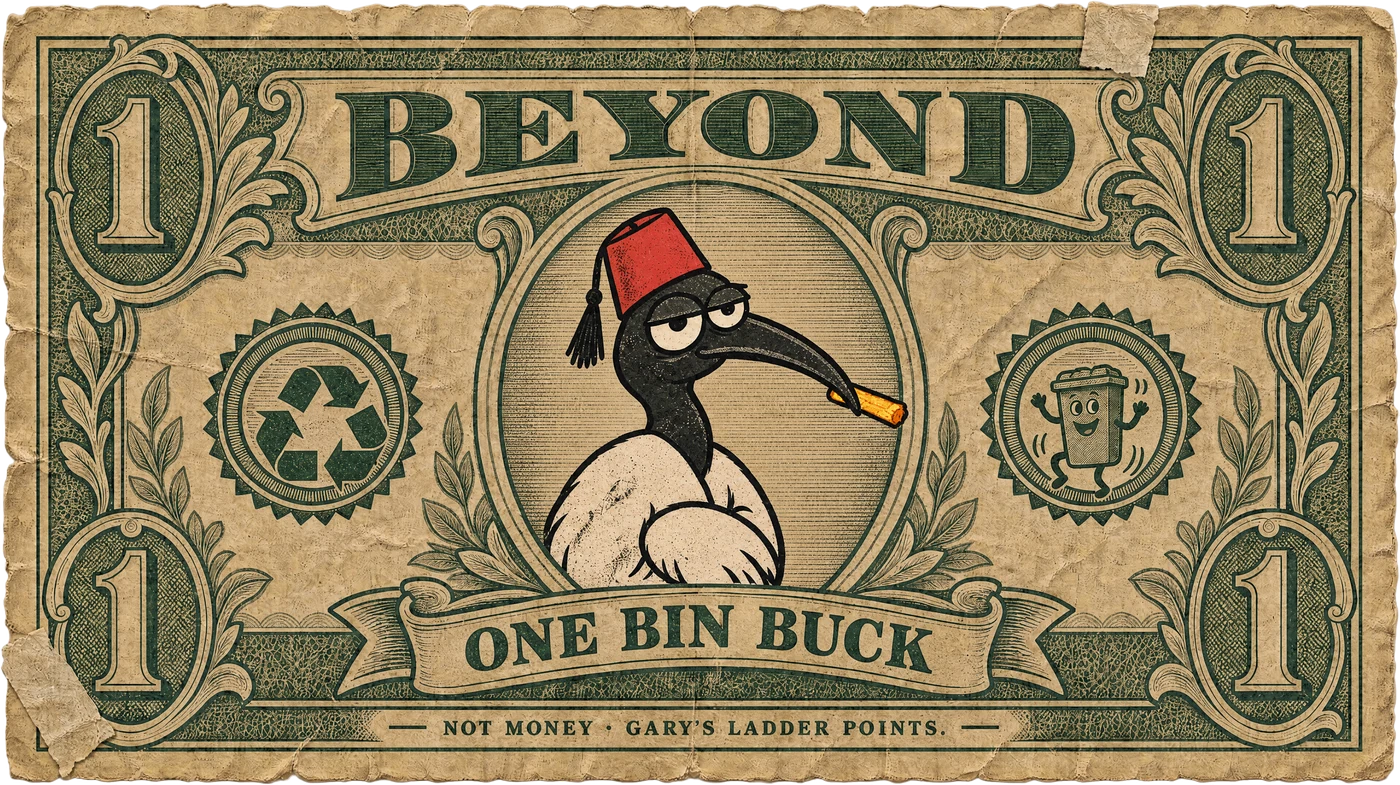
23 × 1.5 = 34.5 Bin Bucks, once for this fixed item. Points, not dollars.
A second life for the chair. A separate score on Gary’s ladder. He’s still not smiling.
“Settled” means the 7-day window after logging the trade has cleared. Until then, that sale doesn’t add Bill Bucks. Only settled money can go into your next Buy.
A held chair adds 0 Bill Bucks.
Not $4. Not what you hope it sells for. Zero.
days after
the trade is logged
This is a diagram, not a live countdown. Bill’s patient. You can be too.
Every dollar you’ve actually got, settled. That’s your score in the Race. $1 became $27? That’s 27 Bill Bucks, shown as 27X. No imaginary chair valuations, thanks.
1 Bill Buck = $1 you actually have.
Gary’s points for giving junk a second life. Sell an item after a Fix or Make move: every $1 of margin scores 1.5 Bin Bucks, once per item. Margin is the sale price minus what you paid.
Ladder points, not dollars. They never change X.

Every item gets a Bill-code photo when you log it.
Every sale needs the buyer to confirm it happened.
Bigger moves need extra proof before they count.
The top 10 get audited. Bill checks the receipts.
5% of everyone else gets randomly audited too.
Three strikes on faked evidence and you’re out for the season.
The final week is sell-only. No buying sprees. What you’re holding is what you’ve got left to sell — and held items still count as zero.
Got your dollar? Bill’s ready when you are.